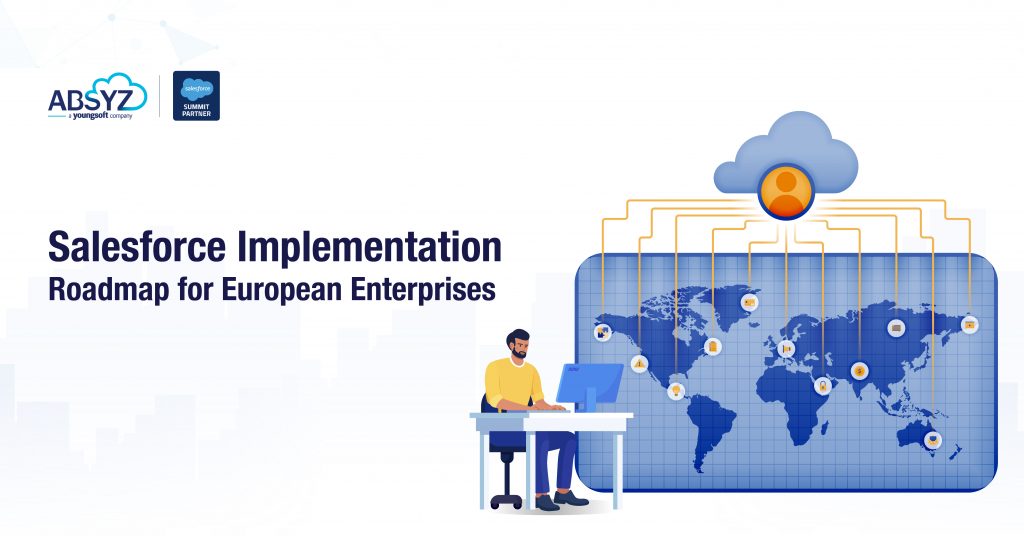
Why Salesforce Implementation Requires a Strategic Roadmap
For many European enterprises, adopting Salesforce is not simply a software deployment—it is a transformation of how organizations manage customer relationships, service operations, partner ecosystems, and data-driven decision-making.
However, Salesforce implementations can quickly become complex when organizations operate across multiple countries, regulatory environments, and legacy systems. Without a clear roadmap, companies often struggle with fragmented adoption, delayed value realization, and operational disruption.
A structured Salesforce implementation roadmap helps enterprises align technology deployment with business outcomes, ensuring that Salesforce becomes a strategic platform rather than just another system in the IT landscape.
Understanding the European Enterprise Context
European organizations face unique considerations when implementing enterprise platforms like Salesforce. These include regulatory compliance, multilingual operations, diverse regional markets, and integration with legacy enterprise systems.
Key factors that influence Salesforce implementations in Europe include:
- Data privacy and GDPR compliance
- Multi-country operational structures
- Complex ERP and legacy system integrations
- Diverse sales and partner distribution models
- Localization requirements across languages and markets
Because of these complexities, successful implementations require a roadmap that balances technical architecture, operational readiness, and change management.
A Practical Salesforce Implementation Roadmap
While every organization has its own transformation priorities, most successful Salesforce implementations follow a structured set of phases.
1. Define Strategic Objectives
Before any technical work begins, organizations must clearly define why they are implementing Salesforce.
Typical objectives include:
- Improving sales pipeline visibility
- Modernizing customer service operations
- Enabling partner and distributor collaboration
- Consolidating fragmented customer data
- Supporting digital transformation initiatives
This phase ensures that Salesforce capabilities are aligned with measurable business goals rather than simply replacing legacy systems.
- Assess the Current Technology Landscape
European enterprises often operate with a complex technology stack that includes ERP platforms, marketing tools, service systems, and proprietary applications.
A comprehensive assessment helps identify:
- Existing CRM or customer data systems
- Integration dependencies with ERP and operational systems
- Data quality challenges
- Workflow bottlenecks across sales and service processes
Understanding the current landscape helps determine how Salesforce will fit within the broader enterprise architecture.
- Design the Salesforce Architecture
Once the current environment is understood, the next step is defining the architecture that will support the organization’s future state.
This includes decisions around:
- Which Salesforce clouds to implement
- Data integration strategy
- Identity and access management
- Data governance and compliance frameworks
- Scalability across multiple regions
At this stage, organizations also determine how Salesforce will integrate with systems such as ERP platforms, manufacturing systems, and data warehouses.
- Implement Core Capabilities First
Successful implementations prioritize delivering value quickly.
Rather than attempting a large-scale rollout, many organizations begin with a focused deployment of core capabilities such as:
- Sales Cloud for pipeline and account management
- Service Cloud for case management and customer support
- Experience Cloud for partner or customer portals
Delivering early wins helps build internal confidence and accelerate adoption.
- Integrate Data and Processes Across Systems
One of the most important steps in Salesforce implementation is connecting the platform to the broader enterprise ecosystem.
This typically involves integrating Salesforce with:
- ERP systems for order and financial data
- Marketing automation platforms
- Data warehouses and analytics tools
- IoT or operational systems in manufacturing environments
Modern platforms like Salesforce Data Cloud can also help unify customer data across multiple systems, enabling real-time insights and AI-driven capabilities.
- Drive Adoption Through Change Management
Technology alone does not guarantee transformation.
European enterprises often have large distributed teams across multiple regions, making change management a critical component of successful Salesforce adoption.
Organizations should focus on:
- Role-based training programs
- Localized onboarding for different regions
- Internal champions who promote adoption
- Clear communication of new workflows and processes
Adoption strategies ensure Salesforce becomes embedded into daily operations.
- Expand With AI and Automation
Once Salesforce is established as a core platform, organizations can begin unlocking advanced capabilities such as automation and AI.
These may include:
- Intelligent lead scoring
- Predictive service insights
- Automated workflows across departments
- AI-driven customer recommendations
These capabilities allow enterprises to move beyond operational efficiency and toward intelligent, data-driven decision-making.
Common Challenges in Salesforce Implementations
Even well-planned Salesforce programs can encounter challenges if key areas are overlooked.
Some common issues include:
- Attempting to replicate legacy processes instead of modernizing them
- Underestimating data quality challenges
- Insufficient focus on user adoption
- Integration complexity across multiple enterprise systems
Addressing these challenges early helps ensure the implementation remains aligned with long-term business objectives.
ABSYZ POV: Building Salesforce Platforms That Scale
At ABSYZ, we work with enterprises across industries to design Salesforce implementations that go beyond system deployment.
Our approach focuses on:
- Aligning Salesforce architecture with enterprise transformation goals
- Integrating Salesforce seamlessly with ERP and operational systems
- Enabling scalable service, sales, and partner engagement models
- Preparing organizations for AI-driven capabilities within the Salesforce ecosystem
By combining strategic planning with technical expertise, organizations can ensure their Salesforce investments deliver sustained value.
Moving From Implementation to Transformation
For European enterprises, Salesforce implementation is not just about deploying a CRM platform. It is about creating a unified digital foundation that connects customers, partners, employees, and data across the organization.
A clear roadmap ensures that Salesforce becomes a platform for innovation, enabling organizations to adapt quickly to changing market conditions while delivering better customer experiences.
Companies that approach implementation strategically will not only improve operational efficiency—they will unlock new opportunities for growth and digital leadership.
Author: Vignesh Rajagopal