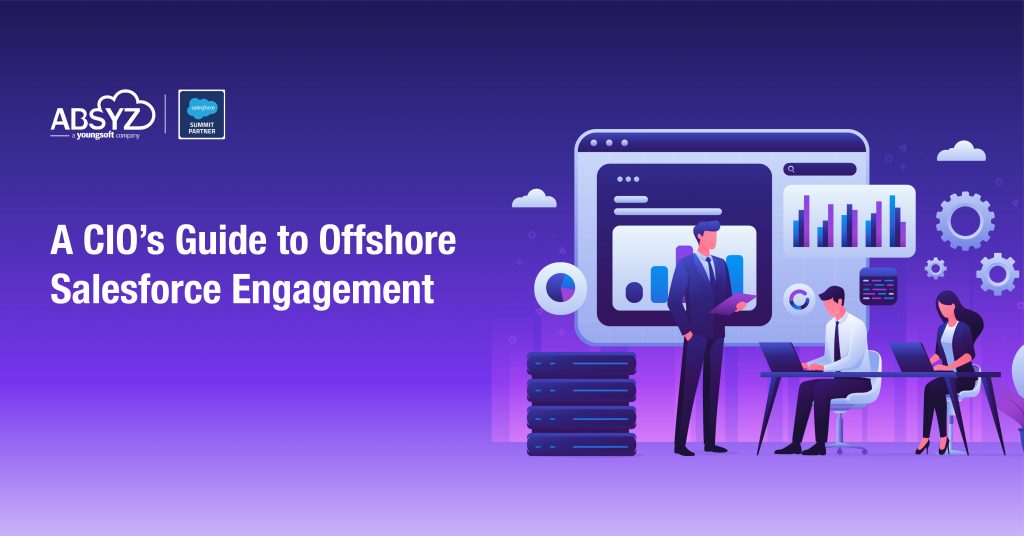
For most CIOs, offshore is no longer about cost arbitrage; it’s about execution velocity and access to capability.
You’re likely considering offshore when:
- Salesforce initiatives are getting delayed due to bandwidth constraints
- You need specialized expertise (AI, integrations, industry workflows)
- Your internal team is stretched across maintenance and innovation
But the hesitation is real and justified.
The Concerns Every CIO Has (And Should Have)
Before committing to an offshore model, there are critical questions:
1. Will I lose control over delivery?
Distributed teams can create visibility gaps if governance isn’t strong.
2. Will quality and consistency drop?
Not all offshore teams operate with enterprise-grade standards.
3. Can they understand my business context?
Technical skills alone don’t translate into business outcomes.
4. What about data security and compliance?
Especially critical for industries like healthcare and BFSI.
5. Will this create more management overhead?
If you need to “manage the vendor,” the model fails.
Where Traditional Offshore Models Fall Short
Many offshore engagements fail because they are structured as:
- Resource-based models (you manage individuals)
- Task execution layers (no ownership of outcomes)
- Cost-driven decisions (not capability-driven)
This leads to:
- Fragmented delivery
- Rework and delays
- Lack of accountability
What a CIO Actually Needs: A Controlled, Outcome-Driven Offshore Model
The right offshore engagement isn’t about adding developers—it’s about extending your Salesforce capabilities with accountability.
Here’s what that looks like:
1. Governance Without Micromanagement
- Defined delivery frameworks
- Clear ownership of outcomes
- Regular visibility through structured reporting
You stay in control, without being pulled into day-to-day execution.
2. Capability, Not Just Capacity
Access to:
- AI-driven Salesforce solutions (Agentforce)
- Data Cloud expertise
- Industry-specific accelerators
This reduces the need to hire niche roles internally.
3. Alignment to Business Outcomes
The focus shifts from:
“What tasks were completed?”
To:
“What business impact was delivered?”
Examples:
- Faster lead conversion cycles
- Improved customer engagement workflows
- Reduced manual operations through automation
4. Built-In Scalability
As priorities shift, you can:
- Scale teams up for transformation initiatives
- Scale down post-deployment
Without long-term hiring commitments.
5. Enterprise-Grade Security and Compliance
A mature offshore partner ensures:
- Secure development environments
- Compliance with US regulations (HIPAA, financial compliance frameworks)
- Controlled data access protocols
When Offshore Engagement Makes Strategic Sense
From a CIO’s lens, offshore works best when:
- You are undergoing a Salesforce transformation at scale
- You need to accelerate roadmap execution without hiring delays
- Your initiatives involve AI, automation, or Data Cloud
- You require cross-functional expertise beyond your internal team
The Shift That Matters Most
The decision is no longer:
“Should we go offshore?”
It’s:
“How do we structure offshore to drive outcomes, not just output?”
How to Evaluate the Right Offshore Salesforce Partner
As a CIO, your evaluation criteria should go beyond cost and certifications:
- Do they understand your industry context?
- Can they deliver end-to-end outcomes, not just development?
- Do they bring accelerators and frameworks that reduce time-to-value?
- Can they support AI and data-driven initiatives?
- Do they operate with clear governance and accountability models?
Offshore Done Right Is a Strategic Advantage
A well-structured offshore Salesforce engagement is not a compromise.
It’s a force multiplier.
When executed correctly, it enables you to:
- Move faster without increasing internal complexity
- Access capabilities that are difficult to build in-house
- Deliver measurable business outcomes at scale
If you’re evaluating how to scale Salesforce without overextending your internal teams, it’s worth rethinking what an offshore model can look like.
The difference isn’t where the team sits. It’s how the engagement is structured, and what outcomes it delivers.
Author: Vignesh Rajagopal