The Salesforce Spring ’26 release introduces new capabilities, including AI agent integration and enhanced security, which help developers implement features more effectively.
Lightning Web Components: Smarter, Faster, More Reliable
- API Version 66.0 brings the latest performance optimizations while protecting your components from legacy behaviour changes.
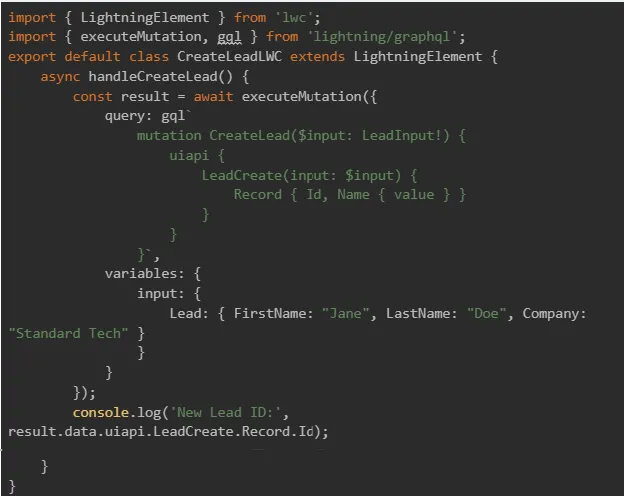
- GraphQL API Mutations allow you to create, update, or delete records directly through the GraphQL wire adapter, streamlining data operations:
- Disconnected DOM Rehydration ensures LWCs only rehydrate when actively connected to the DOM, preventing redundant lifecycle triggers and reducing processing overhead.
- Error Console captures non-fatal component and page errors without interrupting the user experience, making production debugging easier.
- Lightning Out 2.0 supports complex namespaces with mixed casing and allows you to define trusted domain names for external host apps.
Readiness: Teams are proficient in LWC but need GraphQL mutation training and updated debugging workflows. Require 4-6 weeks to develop best practices, code templates, and test Lightning Out 2.0 with existing integrations. We have implemented it as a PoC, which has a drastic performance improvement.
POV: GraphQL mutations streamline data operations and reduce boilerplate code. Adopt for new development immediately while gradually refactoring existing components to improve performance and developer experience.
Apex: Performance at Scale
Apex Cursors: Process Large Datasets Efficiently
Apex Cursors provide a scalable alternative to Batch Apex for processing massive SOQL result sets. Instead of loading all records at once, cursors let you process data in manageable chunks:
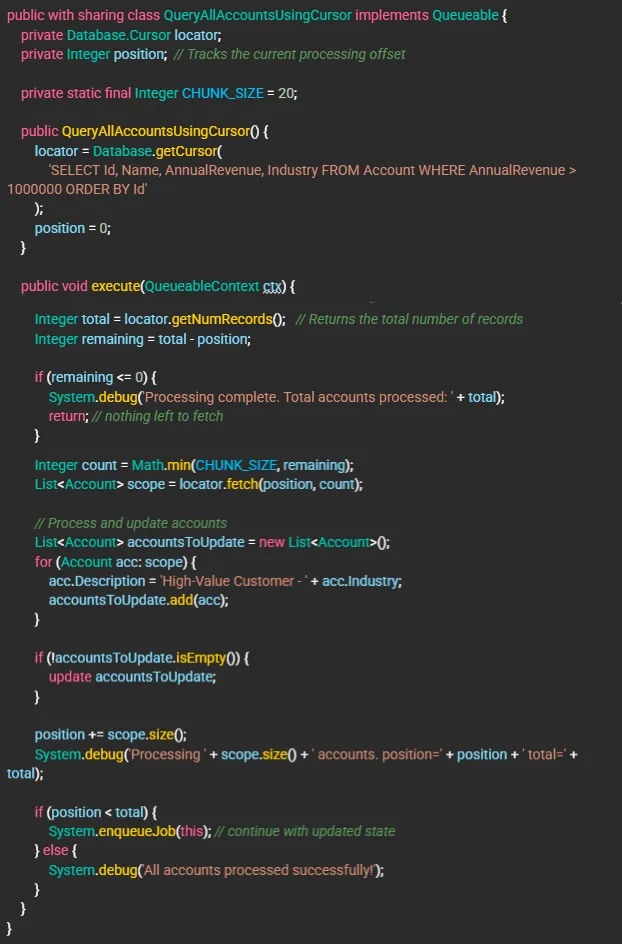
This approach processes millions of records without hitting heap size or query row limits.
Readiness: No current cursor implementation experience. Teams rely heavily on Batch Apex for large data processing. Need 6-8 weeks to build cursor-based accelerators, benchmarking frameworks, and identify migration candidates across the client base.
POV: Apex Cursors represent a paradigm shift for processing millions of records without heap limits. Prioritise adoption for high-volume data migrations, archival operations, and continuous sync scenarios to deliver significant performance improvements and cost reductions.
Streamlined Picklist Management
The new ConnectApi.RecordUi.getPicklistValuesByRecordType method retrieves all picklist values for a specific record type in a single request:
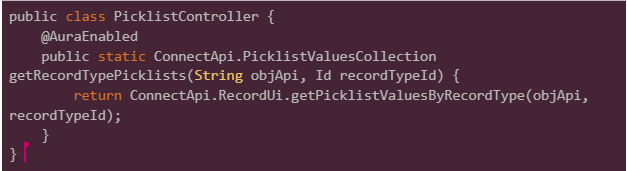
Readiness: Standard picklist handling exists across projects. Require 2-3 weeks to update utility classes, incorporate into coding standards, and identify refactoring opportunities for dynamic form generation.
POV: A single API call for record-type picklists improves performance for complex forms. Low-effort, high-value optimisation that should be included in all coding standards immediately.
Agentforce Integration
Expose Apex REST and AuraEnabled methods as Agentforce actions by annotating them and deploying an OpenAPI specification.
Readiness: Limited AI agent development capability despite strong Apex REST expertise. Require 8-12 weeks to establish dedicated practice, develop OpenAPI specifications, create security frameworks, and build proof-of-concept implementations.
POV: Agentforce is Salesforce’s strategic bet on agentic AI and represents the biggest market opportunity. ABSYZ is driving to establish a Centre of Excellence, develop industry-specific agent action libraries, and position itself as a go-to Agentforce implementation partner.
Async Job Management
The System.purgeOldAsyncJobs() method now supports setting an upper bound for the number of completed async jobs to delete, enabling incremental cleanup in high-volume orgs.
Packaging and Development Tools
Recommended Package Versions
2GP managed package owners can flag a released version as “recommended” via the Salesforce CLI. Subscribers will see an “Upgrade to Recommended Version” button on their Installed Packages page.
Self-Service Debug Logs
Through the License Management App (LMA), ISV developers can grant themselves access to subscriber Apex debug logs, eliminating back-and-forth with subscriber admins.
Lightning Experience Insights
Now generally available, this tool analyses performance trends across production and sandbox environments, identifying slow-performing pages, components, and actions.
Readiness: Established 2GP practices with active ISV products. Require 3-4 weeks to update release processes, enable LMA self-service debugging, and integrate Lightning Experience Insights into performance monitoring.
POV: Recommended package versions improve subscriber experience while self-service debug logs reduce support overhead. ISV teams should adapt immediately to enhance customer satisfaction and operational efficiency.
Platform Events and Messaging
Key Updates
- Outbound Messaging Timeout: Reduced from 60 seconds to 20 seconds to improve system resource utilization.
- Enhanced Security: Starting February 2026, session IDs will be removed from outbound messages in favour of OAuth authentication.
- EventBusSubscriber Updates: The Position and Tip fields are replaced by string-based LastProcessed and LastPublished fields to handle very large replay IDs.
- Change Data Capture: CDC events no longer support custom formula fields, preventing unnecessary change event triggers.
Readiness: HIGH RISK – Multiple client implementations use outbound messaging with session IDs. Require 6-8 weeks to audit integrations, develop a migration playbook, and complete the OAuth migration before the February 2026 deadline.
POV: Session ID removal is a critical security enhancement, but creates urgent migration requirements. Proactive client communication and systematic OAuth migration are mandatory to avoid integration failures.
Lightning Design System: Accessibility First
- WCAG Compliance: Custom styling for highlighted or selected content has been removed. The UI now uses native browser/device styling to ensure proper colour contrast ratios, making your applications more inclusive and trustworthy for all users.
- Theme Enhancement: The SLDS 1 “Lightning Blue” theme received a minor colour adjustment to enhance overall accessibility.
What's New in API Version 66.0
- Connected Apps Restriction: New connected app creation is now restricted by default, with Salesforce recommending External Client Apps for better security. Existing apps remain functional, but new ones require contacting Salesforce support.
- Instance URL Redirection Changes: Automatic redirects from instance URLs (na1.salesforce.com) to My Domain URLs have been discontinued. Update all integrations to use your My Domain URL directly.
- New Features in API Version 66.0. Version 66.0 introduces Apex Cursors, RunRelevantTests deployment, enhanced @IsTest annotations, improved async job cleanup, and the Named Query API. These features unlock scalable data processing and streamlined testing workflows.
- Readiness: MEDIUM RISK – Instance URL redirects discontinued and Connected Apps restricted. Require 4-6 weeks to inventory integrations, migrate to My Domain URLs, and update all documentation and deployment scripts.
- POV: Breaking changes require immediate attention to prevent integration disruptions. External Client Apps offer better security for new implementations, aligning with Salesforce’s security-first approach.
- Named Query API: Expose custom SOQL queries as REST endpoints without code by defining parameterized queries in Setup. Queries automatically become available as API endpoints and agent actions with built-in security.
- Readiness: No current implementation. Require 3-4 weeks to develop governance frameworks, security guidelines, and query templates for common use cases.
- POV: Named Query API democratizes data access and accelerates low-code integration scenarios. Valuable for rapid prototyping and creating agent actions without custom Apex, though governance is critical to prevent misuse.
Moving Forward
Salesforce Spring ’26 delivers production-ready features that modernize development workflows, enhance performance, and strengthen security. From GraphQL mutations in LWC to Apex Cursors for large-scale data processing, this release equips developers with the tools needed to build intelligent, scalable applications on the Salesforce platform.
Author: Sai Rohith Mattaparthi